Evercore Heroes is a roster-based competitive, PvE game where players team up to outplay three other teams on the map without directly fighting each other. Over the course of the game, two other teams will be eliminated by devastating surge wave which all culminates in an exciting head-to-head, PvE encounter between the remaining teams.
Over the course of this project, I worked on many different aspects such as objectives, enemies, items and bosses however, I mainly specialised in character design and implementation through Unreal Blueprints and the Gameplay Ability System.
Character Designs
Here I’ve highlighted the character designs that I am most proud of over my time working on Evercore Heroes.
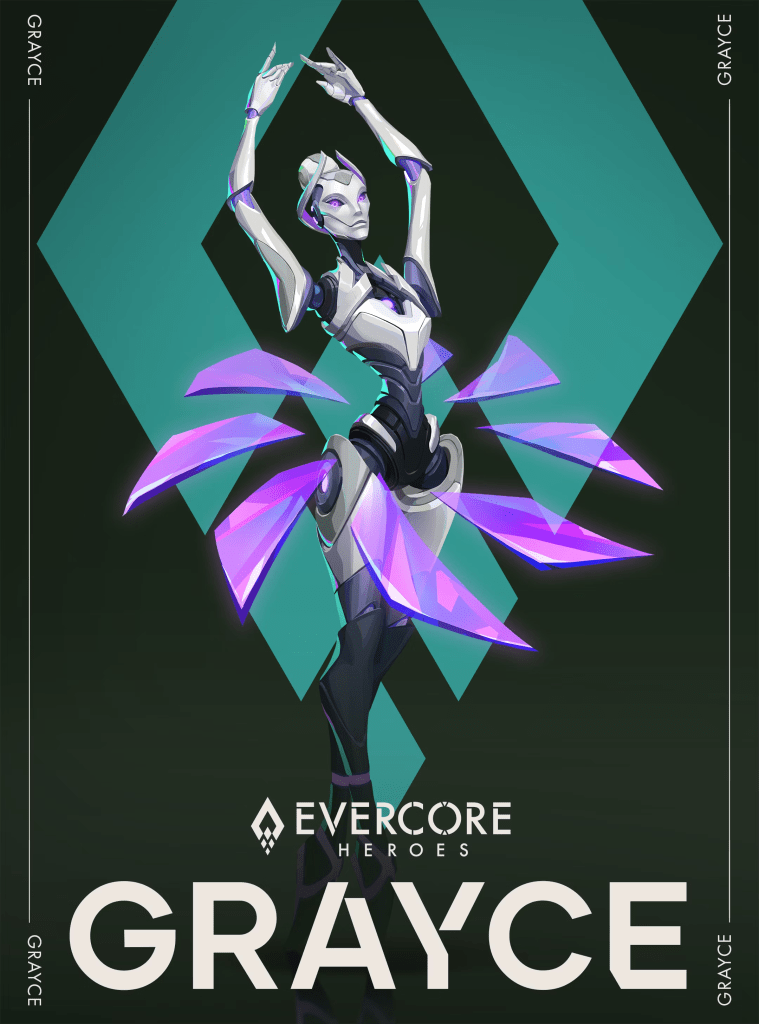
Grayce was a character who was born from a concept of a V-Bo (sentient robots in the Evercore Heroes universe) ballroom dancer and designed to make players feel like they were doing a performance, rather than a fight. After much research on different styles of dance and exploration with the art team, we moved away from ballroom dancing towards ballet as it requires precision and mastery which perfectly fits the theme of a dancer who uses her abilities to assassinate her targets. When designing the kit, I made sure to consider the following:
- Fast-paced:
- A dancer should never just be stood still during a performance so I designed a trait called Encore which allowed Grayce to gain additional casts of her basic abilities provided she satisfied a certain condition for each ability.
- Low skill-floor, high skill ceiling:
- Anyone can attend a dance class and pick up the basic steps of a routine but it takes time and dedication to master your craft.
- The basic abilities themselves are simple on their own but how they work together and with her trait, leads to endless options and complexity.
- Theme is as important as gameplay for this character:
- When designing the kit, I spent time researching various styles of dance along with famous moves before putting pen to paper.
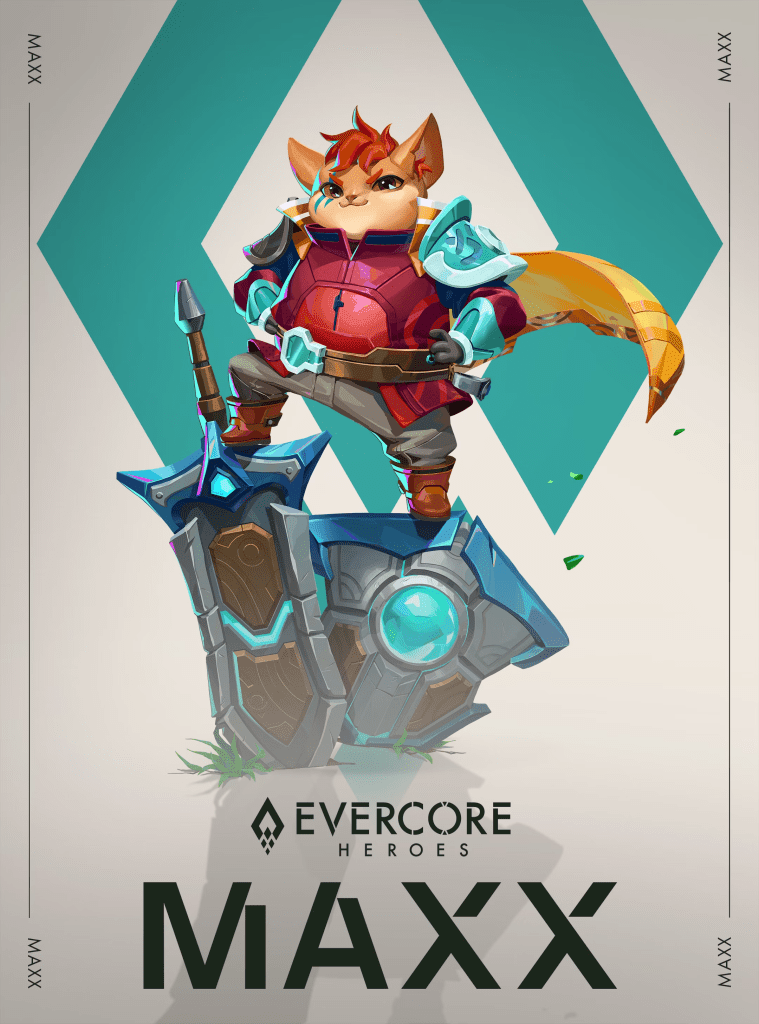
Maxx was designed to be a pint-sized tank who excels at protecting his team but isn’t afraid to go on the offensive when a bit more damage is needed. From the beginning, we knew we wanted to make a Myti (a cute but powerful race of people from the region Moxy) tank who used a large sword and a shield and I was tasked with designing the kit.
In order to realise this, we opted to make him a stance swapping character with an activatable Trait that would allow him to swap between his sword and his shield which would chance his ability set to better suit the role he was trying to fill. When designing the character kit, I made sure to consider the following:
- Ability sets should mirror each other:
- The character abilities should feel familiar to the player whether they are in sword or shield stance.
- In order to achieve this, the abilities were designed to function similarly to one another but would differ depending on the current stance.
- Ability sets should weave:
- Maxx should have access to damaging or tank stance abilities when needed.
- Early in the design, we opted to allow players to weave abilities between stances, meaning ability cooldowns would not be shared between stances. This means that players that use abilities in sword stance won’t be without a tank when a fight requires it.
- Low complexity but high combo potential:
- Each skill on its own is easy for a player to use and understand but by weaving them between stances, it creates complexity.
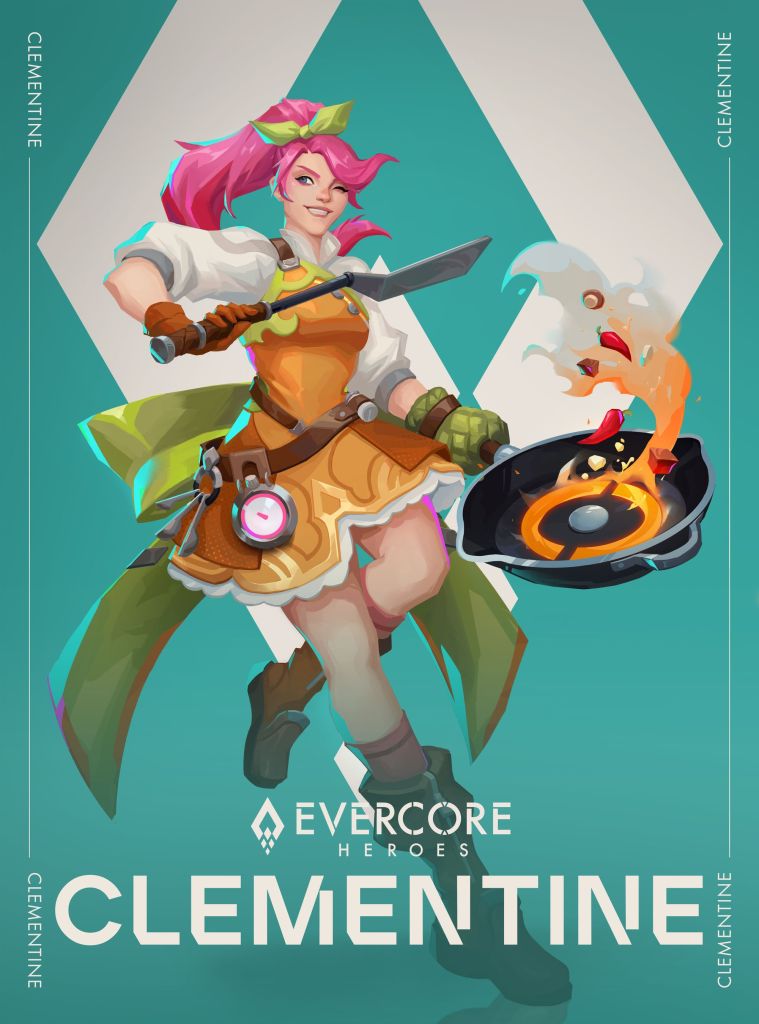
Clementine is a support character who serves food to her team that provide heals, shields, buffs and damaging effects for her team. She is one of our more complex supports as she doesn’t have abilities like all of our other characters, rather she has ingredients that she adds to her pan. After adding two ingredients, the cooking timer starts and the player has to time their Serve ability for when the food is perfectly cooked to get the maximum effect. Meals that are served undercooked or burned are only half as effective.
While designing this character, the following considerations were made:
- Each ingredient should have a defined effect:
- Since the player needs to remember all of the different food combinations, we needed to make sure that it was clear what ingredient gave what effect.
- Honey is the healing ingredient and so, if it is added to a meal, then the effect it delivers will have some form of healing component to it.
- Chilli is the damage ingredient and so, if it is added to a meal, then the effect it delivers will have some form of damage component to it.
- Garlic is the protection ingredient and so, if it is added to a meal, then the effect it delivers will have some form of protection component to it.
- Timing your Serve ability needs to be meaningful:
- We wanted part of the mastery of this kit to come from the cooking timer.
- After much iteration, we managed to get each ingredient combination to feel like it should be perfectly cooked by altering buff values and durations.
Other Designs
Enemies
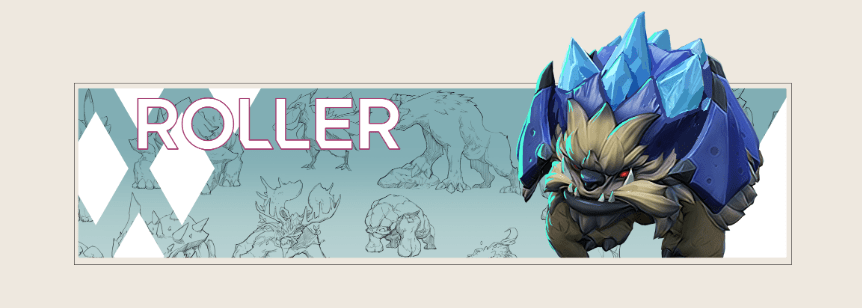
Earlier in development, I worked on a group of enemies for our Ice Biomes and iterated on their designs over time.
Enemies that fall into this category start with a shield which grants them high resistance to physical damage and while this shield is up, they are treated as being in phase 1 and when the shield is broken, they move into phase 2 where they have high resistance to magical damage. Each of these enemies have a different moveset for each phase so players need to adjust their play patterns in each phase.
One creature design I was particularly proud of was our Roller which acts as this enemy group’s ranged unit. In phase 1, it has its standard ranged attack as well as a high risk, high reward attack where it charges up and rolls towards players. If it does not hit a player, then it’ll reach the end point and recover, giving players a chance to retaliate however, if it does hit a player, it deals high damage and stuns the player before bouncing back into an advantageous position where it can follow-up with a ranged attack. This combo has very fair telegraphing for players to avoid and tanks can also body block the roll itself or the follow-up attack to protect team mates that fail to avoid it. When the Roller moves to phase 2, it loses its roll attack and instead can cause a telegraphed explosion under a player. The AOE follows a player until right before it goes off giving the targeted a player to get out of the area. The targeted player needs to be careful not to pull the AOE onto their team and their team needs to steer clear a space for the player to move to otherwise, they risk getting caught in the explosion.
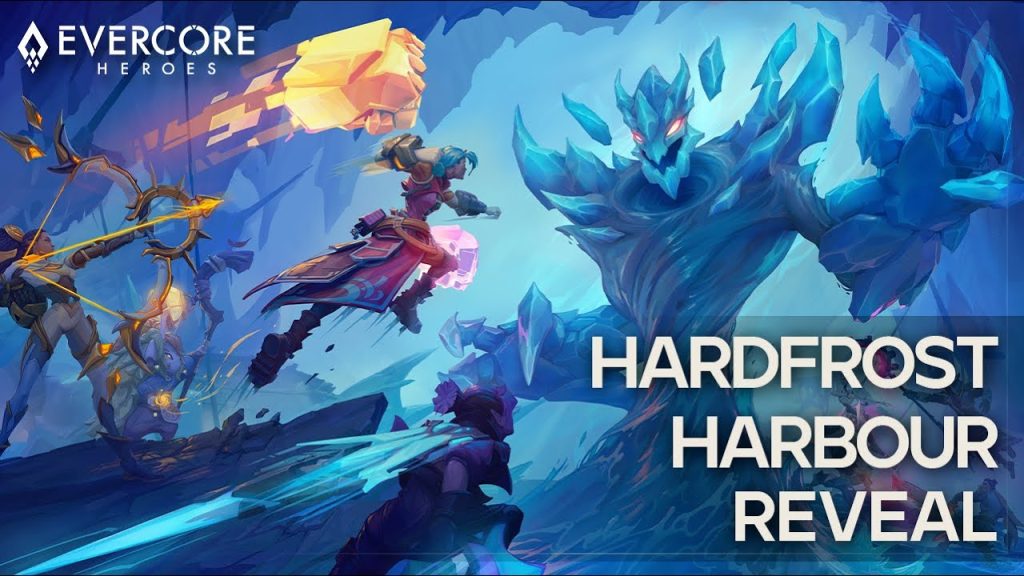
Wintress Frostweaver
I was tasked with designing our boss encounter for the Hardfrost Harbor map. The main challenge with this boss design was that it would be our first boss encounter where two teams would be fighting a boss in the same arena. The arena was shaped like a horseshoe with a split in the middle that players could not cross. The boss would target both teams at the same time with each attack targeting a player on each side of the arena. The fight was designed to work in three phases with skill tests in between that triggered when the boss loses 1/3 of its health.
- Phase 1:
- The boss starts out with a simple attack sequence that players can quickly pick up on.
- This sequence is Fist Slam -> Basic Attack -> Basic Attack -> Repeat.
- The basic attack is just a simple projectile that follows a single player, dealing moderate damage. Tanks should try to soak up the damage from this attack or block it.
- The fist slam is an AOE centered on a single target that can be avoided. After the attack is finished, the boss’s fist stays on the ground allowing each team to deal extra damage by hitting it.
- Skill Test 1:
- The boss vanishes beneath the water and summons 7 adds on each side of the arena.
- The first team to defeat their adds wins and the boss emerges on their side of the arena which allows that team to get free damage on the boss for a few seconds.
- Phase 2:
- When the boss returns to the center, phase 2 starts and two new attacks are added to the sequence.
- The boss opens with a new unavoidable ice laser targeting a player on each team. The beam does no damage but builds up stacks of frost which freezes the target in a breakable block of ice.
- After this, the boss summons an ice wall that spans the length of the arena and moves across the stage, dealing huge damage to anything it hits and breaking on impact.
- The player being encased in ice can position themselves so that their team can group behind them as the wall comes in. The wall hits the ice block and breaks which saves that player’s team who can then break the ice block to release their ally. Alternatively, some player abilities can block or dodge the wall to get around it if the frozen player is broken out too early or doesn’t position correctly.
- The boss then uses the standard Fist Slam -> Basic Attack ->Basic Attack before repeating the entire sequence again.
- Skill Test 2:
- The boss winds up a powerful conic attack that covers a large surface area.
- Each time the boss takes damage, it rotates away from the team that damaged it and towards the enemy team. The rotation rate is based on the amount of damage the boss receives from a given hit.
- Both teams are locked in a tug of war moment where they have to deal as much damage as the can to the boss so it rotates the attack towards the enemy team.
- After the channel completes or the boss has been rotated 90o towards either team, the boss unleashes the attack which deals massive damage to anyone caught in the AOE.
- Phase 3:
- This phase gives the boss the ability to summon adds at the start of the sequence to add pressure to the end of the fight. Teams that neglect their adds risk being overrun during the end of the fight and so focusing down the boss in the final phase is risky.
- The new sequence is now Summon Adds -> Freezing Laser -> Ice Wall -> Fist Slam -> Basic Attack -> Basic Attack -> Repeat.
This boss fight was challenging to implement as it required me to put into practice everything I had learned about the Gameplay Ability System and make use of behaviour trees to handle the sequences and phase changes.
 Cillian Lambe